Arcadis boosts customer satisfaction and delivers over £100K in client savings with HxDR Reality Cloud Studio 

Note: HxDR Reality Cloud Studio is now Hexagon GeoCloud. Learn more about the change.

“The most impactful part for us in HxDR Reality Cloud Studio has been the ability to share data easily and allow anyone to view it from anywhere. It has strengthened collaboration across regions and reduced the need for repeated site visits.” – Thomas Coar, Associate Technical Director, Geomatics 

Challenge:  

  • Data Volume Bottlenecks: Point cloud datasets were extremely large and difficult to move across global teams, resulting in slow transfers and multiple local copies of the same data 
  • Site Visibility Gaps: Made it difficult for teams and stakeholders to collaborate, review conditions, and stay aware of safety issues without being on-site 
  • Inefficient File Management: Sharing files through SharePoint and USB drives placed strain on internal systems, consumed unnecessary storage, and created version control issues that made it difficult to maintain a single source of truth 
  • Disconnected Data Sources: Survey data from different groups and subcontractors lived in separate locations, making coordination difficult for bridge, highway, MEP, architectural teams, and other project stakeholders 
  • Cost Pressures: Inefficient workflows and repeated site visits created unnecessary project costs, especially for clients who needed to revisit controlled or restricted sites 
  • Multi-Source Data Complexity: Arcadis captured data from Leica and competitive scanners, as well as terrestrial, drone, and mobile-mapping hardware, but had no single system capable of handling all formats consistently 

Solution:  

  • Centralized Cloud Data Environment: HxDR Reality Cloud Studio provides a single, cloud-based location for all spatial data, giving Arcadis a consistent digital record of every site and eliminating the need for repeated site visits 
  • Streamlined Point Cloud Delivery: Teams no longer rely on SharePoint or USB drives for file transfers. They can verify data accuracy before sharing a link, removing duplication, and ensuring everyone works from one trusted dataset 
  • Improved Global Collaboration: The platform supports real-time access for distributed teams, allowing Global Excellence Centers and regional offices to work on the same dataset simultaneously and maintain a continuous workflow across time zones 
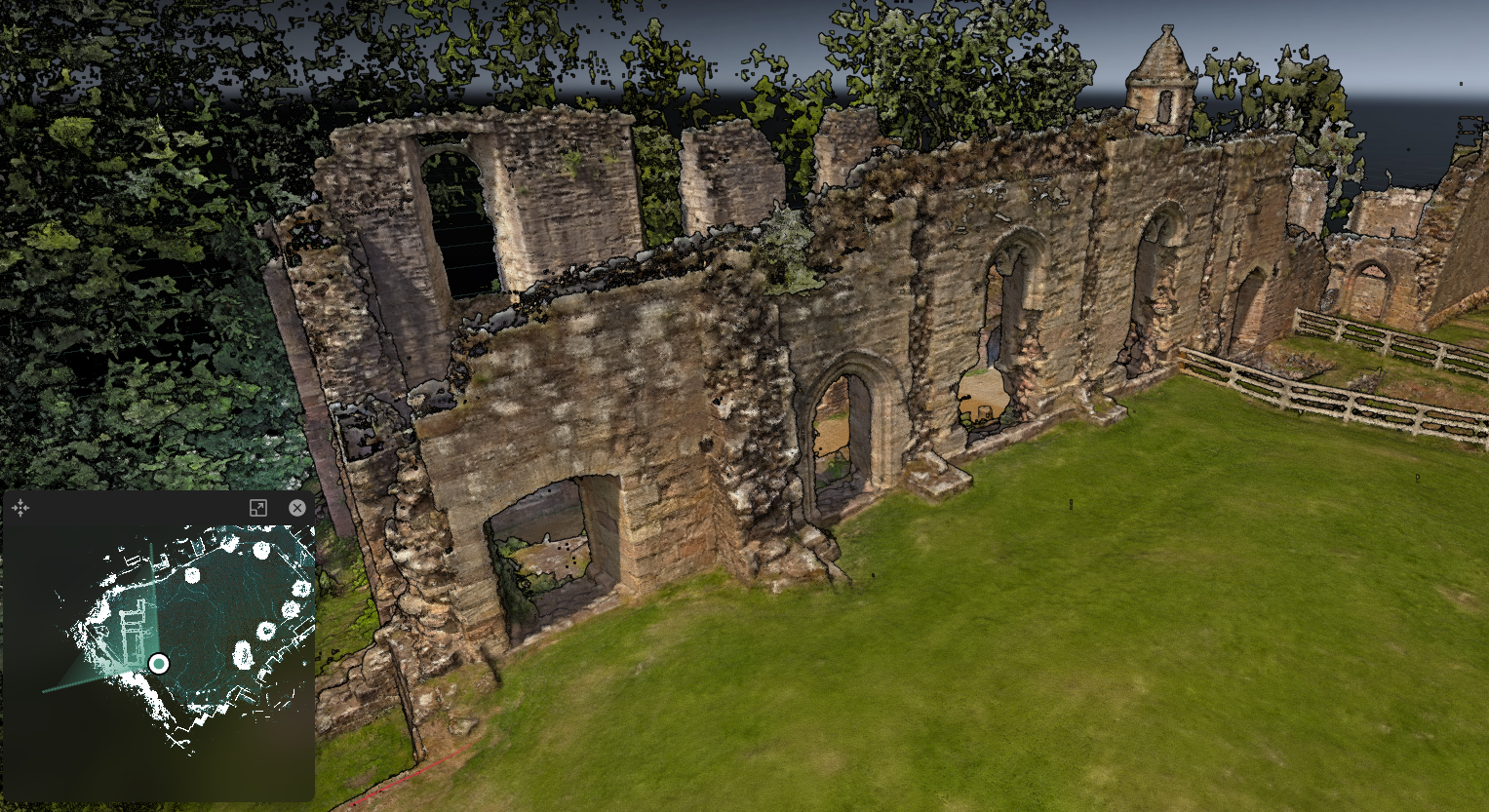
  • Enhanced Remote Visualization: Virtual walkthrough capabilities allow clients and internal teams to navigate sites from anywhere, which is especially valuable for controlled or restricted environments 
  • Flexible and Scalable Access Controls: Arcadis can add internal teams and external collaborators to a single, controlled dataset, improving security, consistency, and accessibility across stakeholders 
  • Support for Multi-Source Data Workflows: HxDR Reality Cloud Studio is fully data-agnostic, supporting inputs from Leica and competitive hardware and from terrestrial, drone, and mobile-mapping workflows in a single cloud environment. This lets Arcadis consolidate all survey outputs without format restrictions or fragmented processes 

Value:  

  • Increased Demand for Digital Walkthroughs: Clients now regularly request 3D walkthroughs as part of project deliverables, with some projects commissioned specifically for data visualization, a shift that did not exist before adopting HxDR Reality Cloud Studio 
  • Faster Project Turnaround: Eliminating SharePoint uploads and USB transfers has accelerated point cloud delivery, allowing Arcadis to complete more projects in less time while improving the overall client experience. 
  • Greater Clarity and Accessibility: Both internal teams and external clients access survey data directly within HxDR Reality Cloud Studio, improving visibility, accuracy, and collaboration across disciplines. 
  • Significant Cost Savings for Clients: For one project, virtual walkthroughs removed the need for repeated site visits, saving approximately £3,000 per location and delivering an estimated £120,000 in savings across 40 surveyed sites 
  • Improved Safety and Reduced On-Site Requirements: Engineers can analyze complex environments, such as airport carparks, without lengthy closures, night shifts, or repeated on-site activity, supporting safer and more efficient project delivery. 
  • Reliable Data for Confident Decisions: Being able to trim, inspect, and view data from multiple angles gives teams greater confidence in the accuracy of the captured data and supports higher-quality assessments and outputs 
  • Widespread Team Adoption: HxDR Reality Cloud Studio is now used as a business-as-usual tool, with four administrators managing uploads and approximately 60 team members collaborating across shared datasets 

About the client:  

Founded in 1888, Arcadis brings more than 135 years of experience in delivering innovative, sustainable design, engineering, and consultancy solutions for natural and built environments. Headquartered in the Zuidas district of Amsterdam, Netherlands, the firm works across infrastructure, buildings, water, and environmental services to help create resilient, sustainable, and livable communities. With 36,000 experts operating in more than 70 countries across Europe, the Americas, Asia-Pacific, and the Middle East, Arcadis delivers over 40,000 projects each year for governments, utilities, developers, and private-sector organizations. A leader in digital innovation, Arcadis offers data-driven solutions including BIM, digital twins, and smart infrastructure, supported by a strong commitment to net-zero goals and the UN Sustainable Development Goals. Ranked number one in its sector by Sustainalytics and in the top one percent by EcoVadis for sustainability performance, Arcadis continues to drive impactful growth, generating €5 billion in gross revenue in 2024. 

Challenge:  

Arcadis needed a unified workflow that allowed survey data to be captured once and reused consistently across teams, disciplines, and project phases. High-fidelity point cloud data was a critical requirement, delivering a dependable digital record of each site and supporting remote access in place of physical visits. Their work relied on a combination of Leica and competitive scanners, and managing outputs from their multi-sensor ecosystem increased complexity and highlighted the need for a data-agnostic solution capable of supporting large, diverse datasets in a single environment. 

These datasets were extremely large, often reaching 100 GB of raw data, which made it difficult to transfer efficiently. Uploading and downloading this volume of information required significant time and distributing it between global teams frequently led to multiple local copies, breaking the single source of truth principle. 

Teams depended on SharePoint uploads or physical USB drives to move data, creating version control issues, unnecessary duplication, and a recurring risk of corruption or complete data loss on local hardware. Compliance requirements added further challenges, with certain projects requiring controlled access, retention limits, and GDPR-aligned security measures. The existing workflow made it difficult to ensure that only authorized users had access to sensitive survey information. 

Arcadis also needed a way to securely share data with subcontractors, including Revit modelers, without forcing them to download full datasets. Although offline copies were sometimes provided, stakeholders lacked an easy way to visualize and navigate the site for design context. In practice, point cloud data had to be distributed across many groups, including bridge and highway engineers, MEP teams, architects, and other stakeholders, which made scalability, access control, and consistent delivery essential requirements for the business. 

Solution:  

HxDR Reality Cloud Studio transformed how Arcadis shares, visualizes, and manages its point cloud data. By hosting all spatial data in one cloud environment, Arcadis can provide a consistent digital record of every site and allow teams to navigate locations remotely. This has strengthened safety by reducing the need for multiple site visits and giving users a clear understanding of conditions from anywhere. HxDR Reality Cloud Studio also removed the complexity of managing data from their multi-scanner ecosystem by supporting outputs from Leica and competitive hardware in a single, cloud-based environment. 

The platform has streamlined the delivery of point clouds. Teams no longer rely on SharePoint uploads or downloads, and they can confirm data accuracy before sharing links. This approach removes duplicate local copies and ensures everyone works from one trusted dataset. 

HxDR Reality Cloud Studio also improved global collaboration. Arcadis can involve its Global Excellence Centers more efficiently, allowing teams in different regions to work on the same dataset at the same time. On a recent multi-story airport carpark project, this enabled a near 24-hour workflow across time zones and accelerated the structural assessment without repeated on-site work. 

Arcadis’ clients saw meaningful improvements as well. In hospital laboratories where access is tightly controlled, virtual walkthroughs allow design teams to revisit the site on demand. This capability has become essential for delivering work in restricted environments. 

Arcadis had used other solutions when specified on past projects, but pricing models based on per-setup uploads were difficult to manage because their data comes from different hardware sources, terrestrial, drone, and mobile mapping sources. HxDR Reality Cloud Studio removed this limitation by supporting all data types in one place. 

Ease of use and ease of sharing have been the most valuable capabilities for the team. Arcadis can add numerous internal and external collaborators, all working from a single, controlled dataset. They continue to process raw data in Cyclone 3DR, Trimble Business Center, and Context Capture before uploading into HxDR Reality Cloud Studio for storage and access. They plan to expand their workflows by streaming data directly from the platform into Revit. This next step will further strengthen their collaborative workflows and keep every project aligned with one trusted source of truth. 

Value:  

HxDR Reality Cloud Studio has delivered measurable value for Arcadis by improving the speed, quality, and impact of their reality capture workflows. One of the most notable improvements has been the growing number of client requests for walkthroughs as part of project deliverables. In many cases, entire projects are now commissioned specifically for the visualization of spatial data, which was not a typical request before adopting the platform. 

By removing the need to share files through SharePoint or USB drives, Arcadis can deliver point clouds and virtual site access much faster. This has increased overall project throughput, allowing teams to complete more work in less time and provide a higher-quality experience for clients. 

The improvements in clarity, accuracy, and accessibility represent a significant upgrade over previous methods. Both internal teams and external clients now access survey data directly in HxDR Reality Cloud Studio, improving satisfaction and strengthening collaboration. For the hospital laboratory program, the virtual walkthrough feature has become an essential part of the design process. It eliminates repeated site visits, saving the client approximately £3,000 per location. With 40 laboratory sites surveyed this year, this represents a cost saving of roughly £120,000. 

The platform has also improved safety across major infrastructure projects. During the structural assessment of a multi-story airport carpark, engineers were able to analyze the complete dataset through HxDR Reality Cloud Studio without lengthy closures, night shifts, or repeated on-site activity. Viewing and trimming the data from multiple angles provided confidence in the accuracy of the capture and supported a thorough and reliable assessment. 

Arcadis now treats HxDR Reality Cloud Studio as a business-as-usual tool and plans to deliver all future projects through the platform. Currently, four administrators manage data uploads while approximately 60 team members actively use the system for collaboration. Moving from static images to full 3D walkthroughs has already improved client satisfaction, and Arcadis expects that impact to grow as more teams adopt the platform across regions and disciplines. 

“When we introduce HxDR Reality Cloud Studio to internal teams and clients, we use it to demonstrate the art of the possible. It’s not just a solution for viewing data. It is an innovation tool that shows how far we can advance our workflows, our collaboration, and the value we deliver.” – Thomas Coar, Associate Technical Director, Geomatics 

You might also enjoy